Featured

Introduction

Reelout Film Festival Overview

The annual Reelout queer film + video festival returned to Kingston for the 21st consecutive year. It was filled with laughs, tears, and though provoking films. The venue fits the tone of the festival perfectly. The small intimate venue of the Screening Room makes for a spectacular viewing experience.

The film festival =discussed issues such as race, gender, and intersectionality. It was amazing to see such a diverse crowd come together to celebrate and learn together about one of the most polarizing and unifying issues in the past century.

The introduction to open the films was sponsored by Queen’s Positive Space. This organization helps Queen’s campus to be a safe, inclusive, and welcoming community for individuals of any race, gender or orientation. This was very fitting to be included in the experience because it promotes a positive attitude towards acceptance, tolerance and respect.

The Reelout queer film festival was a unique experience with a diverse audience. It was a very welcoming environment. There were lots of greeters with smiling faces and decorations that were both inside and outside the theatre to welcome the audience. The experience was very communicative and all of the staff and audience were very involved with the presentation. The difference between this experience and going to see a movie in a regular theatre was that the Reelout festival was a full experience from entering the theatre to exiting. Whether it being greeted at the door, given flyers, or indicating how we felt about the film(s) afterward by putting a button in a bag.


The independent theatre experience was a very intimate setting. There was not a lot of people in the audience, so we were able to sit close to the presenters and feel a sense of community and belonging. It felt like a genuinely real experience that could not be replicated anywhere else. The discussions after the films were intriguing and inclusive, too. Changing the Game had a panel afterward that included two people who are trans and involved in sports who spoke about their personal experiences and observations. There was also a person from the Limestone District School Board who spoke about what is being done in elementary schools to encourage trans acceptance on and off the field, and a professor from Queen’s who specifically researches inequalities in sports. It was eye-opening to hear about what has been done regarding trans issues and what is currently being done within communities around us.

Unsettled: Seeking Refuge in America

Ethan Jaques

20154343

The 2020 Reelout Queer Film Festival was a spectacular event that brought together people of all different races, genders, social classes, and sexual orientations. Those elements are just a few of the dozens of elements that are used to describe intersectionality. On February 4th, I attended the screening of the film Unsettled: Seeking Refuge in America, directed by Tom Shepard. This masterpiece of a documentary touched on many aspects of the struggle refuges face once landed in America. It follows the stories of a several people who came to America seeking asylum. The film dives into their struggles and adjustment to life in America since moving from countries with strict anti-gay law enforcement.

Shepard starts the documentary by introducing the people he will be following for the next year. We first meet Subhi Nahas. Nahas is a homosexual man originally born in Syria. He had escaped to Lebanon after members of a branch of ISIS came to his town to kill any members of the LGBTQ+ community. He then fled from Lebanon to Turkey and from there he was able to fly to San Francisco. Since gaining refugee status, Nahas has become somewhat of a celebrity in the LGBTQ+ community. During his short time in America so far, he has started his own NGO, he spoke before the U.N. security council, and was a grand marshall of NYC pride parade 2016 (Leach and Banning-Lover, Breaking through from Oppression). Nahas was fortunate that his sponsor who helped bring him to America was well connected and was able to give him the opportunities that he got. This is unlike one of the other persons the documentary followed.

Junior Mayema is a refugee from the Democratic Republic of the Congo. There he was brutally beaten and disowned by his mother and most of his community. He discovered he was homosexual while attending university in the Congo. Mayema has faced much more difficult challenges compared to Nahas since landing in San Francisco. Mayema only had temporary housing for a month before he had to move out. In the film we see him move 31 times within his first year of being in America (Shepard 2019). Being a refugee in America already puts Mayema in an incredibly vulnerable position. In addition to the fact that he is gay as well as not being fluent in English, Mayema could very easily be taken advantage of. This happened when after a few months of being in San Francisco he met an older man who he started an intimate relationship with. It is at this point in the film that we learn about Mayema’s drinking problem. The older gentleman took a young man who was in a vulnerable position and used him as someone just for sex. He was a negative influence on Mayema’s drinking habits and after several weeks of living together he kicked Mayema out. It was at this point where I started to understand how intersectionality played a major role in Mayema’s experience so far. A lot of the traits that made up Mayema, which include being foreign, black, gay, an alcoholic, and a refugee, all play a role in Mayema’s day-to-day experience. As Peter Kaufman said in his article Intersectionality for Beginners, “intersectional experience is greater than the sum of racism and sexism” (Kaufman, Intersectionality for Beginners).

The last people we meet are a lesbian couple from Angola, Cheyenne Adriano and Mari N’timansieme. Adriano and. N’timansieme came seeking asylum after a family member tried to kill them by poisoning their food (Shepard 2019). These women came here on student visas and were not guaranteed asylum when they arrived in San Francisco. Shepard follows them as they dive into the legal process with an attorney that their sponsor set up for them, to help them gain refugee status. Mari has a very emotional personality which made it emotionally hard to watch some scenes as she would break down in tears while talking about the abuse she had faced back in Angola and how hard the process had been to gain refugee status. Eventually they gained status after 2 long years of waiting for a chance to present their case. Thankfully, they won.

This film made me think a lot about the relationship between Intersectionality and Refugees. As well as the process of gaining refugee status. It is unbelievably kind and thoughtful when a country allows people seeking asylum into their country. However, the system is fatally flawed. While San Francisco is known as very progressive and has been home to many famous LGBTQ+ rallies and protests, it is also incredibly expensive. This can make it very difficult for refugees to find stable housing and live a semi-comfortable life. Each person seeking refuge must be treated as an individual. There wants and needs are different than the next person. That is how refugees and intersectionality mingle. Everyone must be looked at through a lens that identifies all the different parts of the individuals background, which includes race, sex, gender, language barriers, etc.…

            The scene I found most interesting in the film was near the end when Nahas went over to his then boyfriends house for Christmas. This man’s family was in a small town in Michigan. It was interesting to see how the man’s father interacting with Nahas. There was never any disrespect intended; however, it was clear that he was very uncomfortable around Nahas. The father commented on how Syrian’s are portrayed as terrorists in the media, but, then goes on to say that there are many bad Americans as well. The whole exchange was awkward, it was fascinating to see how isolated some people are from the truth surrounding intersectionality and refugees. With the growth of the internet being a major source of information for most people in first world countries, it is mandatory that the right information gets published and hate speech is eliminated entirely. For people in small isolated communities they need to be exposed to the same progressive ideologies that more urban areas are and not hate speech must be eliminated. According to Rebecca Ann Lind, the answer to combating this issue is by “more speech not less. Undesirable (even bad) ideas are best countered not by censorship but by better, more enlightened speech”(Lind 249).

            My experience watching Shepard’s film Unsettled was a moving experience. My eyes were opened too many new perspectives regarding how intersectionality effects different people. Intersectionality plays a crucial role in society not just as a division between people but I think it can play a role in bringing people together.

Bibliography

  1. Kaufman, Peter. “Intersectionality for Beginners.” Everyday Sociology Blog, 23 Apr. 2018,  

             www.everydaysociologyblog.com/2018/04/intersectionality-for-beginners.html#more

  • Lind, Rebecca Ann. Race/Gender/Class/Media 3.0: Considering Diversity across Content, Audiences and Production. Vol. 3, Pearson, 2013.
  • Shepard, Tom. Unsettled: Seeking Refuge in America, Open Door Productions, 21 Nov. 2019, www.unsettled.film/.

The Good Kisser- Analysis

Kate Milne 21059012

The Good Kisser is a fictional film written and directed by Wendy Jo Carlton that follows a story of two women in a relationship that decided as a couple to spend an intimate weekend with another woman. The couple, namely Jenna and Kate travel to Mia’s house to spend the weekend there for a change of speed in their relationship. After analyzing the full film, I came to the conclusion that while “The Good Kisser” tells a humorous story, it simultaneously advances lesbian stereotypes and poor relationship examples for the audience.

Before analyzing the messages embedded within the film, it is critical to discuss the general content presented. As mentioned previously, Jenna and Kate are a monogamous lesbian couple who made a decision together to try having a threesome with another woman named Mia. Mia, a single woman and a friend of Kate’s, is presented as mysterious, enticing, and secretive about her life as well as being incredibly seductive with both Jenna and Kate. Kate is presented as more of a tomboy while Jenna is shown as girly and peppy. At first, Jenna is very timid about the entire interaction and feels it may not be the best idea for her to be participating, but Kate is able to calm her down. Slowly, Kate and Mia convince Jenna to get drunk to calm everyone down as they all appear nervous. The women start to become intimate and the cracks begin to show. At this point, it becomes obvious that Kate and Mia are very comfortable with each other while Jenna is more hesitant to engage.

As Jenna continues to be coerced into participating, it begins to become apparent that Jenna is participating in order to avoid disappointing Kate and not for her own pleasure. Slowly, Jenna recognizes of the closeness of Kate and Mia and suspicion rises. Eventually, Jenna gets frustrated and leaves the situation. Kate does not leave to check on Jenna which only escalates the situation further, leading to Jenna’s realization that Mia and Kate are much more than friends. When Jenna confronts Kate, she decides to do it in a passive aggressive way in which she gets intimate with Mia next to Kate without interacting with Kate directly. Kate understands the message and realizes Jenna has figured out what she has been hiding.

Though the story itself is full of twists, after a full analysis for underlying messages it is clear the film represents much more than a queer comedy. Beginning with the characters themselves, Carlton creates personalities that follow direct stereotypes of lesbian women. Jenna is seen as a typical excitable woman while Kate is shown as a butch woman which creates the typical “man and woman” interaction between two women in a lesbian relationship. Furthermore, Mia is represented as a mysterious and enticing woman which furthers the stereotype that lesbians are exotic. Though these can simply be the personalities that fit the story, it certainly raises questions about why the author had decided to make this film in the first place. As an audience member, I felt that the inclusion of these stereotypes was a poor representation of the lesbian/queer community as it strengthens the conventional image of lesbians that the LGBTQ+ community has been trying to break down for decades. As stated by Sara Ahmed in her article Being In Question, “Norms may not only have a way of disappearing from view, but can also be that which we do not consciously feel.” This quote shows the importance of analyzing all stereotypes that may be present in films to ensure we are properly representing the LGBTQ+ community.

In addition to the character stereotypes, there are certainly some clichés included in the storyline. For instance, the representation of the intimacy between the three women was very kinky and erotic. This depiction of the women appears to further common ideas about lesbian relationships that they are not normal romantic relationships, but rather they are sexy interactions that are to be enjoyed by others. It appears as if Carlton used this tactic in “The Good Kisser” to entice the audience members. These apparent motives not only delegitimize the representativeness of the queer film but also further the widely held idea that lesbian relationships are erotic and for the viewing pleasure of other people. Though speaking on misrepresentation of disabilities in television, Alison Harnett presents the same idea in which writers make it appear as if its “crucial that a disabled person learn to accept their disability, rather than constantly struggling to rise ‘above’ it to ‘normality’.” This quote captures the idea that disabled people, much like people of the LGBTQ+ community are not often represented as normal people, but rather their minority or differences defines them and their character in the film.

In a more general view of the film, the audience can clearly see some poor representations of romantic relationships throughout the plot. This begins with Kate’s persistent pressure to have Jenna engage in the threesome with a new woman. This is not a representation of a good relationship, as Kate should be understanding and gentle with Jenna. This poor representation tied to the lesbian relationships can certainly create a poor image for the LGBTQ+ community as it places a bad name on lesbian love. There is also certainly a poor image depicted in which Jenna feels overcome with a need to not disappoint her partner, and with this comes her participation in activities she does not feel completely comfortable doing. Finally, there is a strange dynamic in which Jenna is originally uncomfortable and insecure with the situation, but after finding the problems in her relationship, she is suddenly driven to participate in the sexual acts with Mia. This sudden change in intentions made for a poor dynamic in the film. While it is certainly Jenna’s right to make her own decisions, the audience could have easily understood this as a lack in willpower or a poor representation of lesbian sexual desire in relationships.

While my analysis was certainly critical of the film, I still found the plot to be entertaining and humorous. The film itself was very well made, including proper lighting and film techniques, but I found it hard to ignore the underlying messages of stereotyping and negative representations of the LGBTQ+ community, especially as this film was shown at a queer film festival known for its strong positive representations of the queer community.

Citations:

Harnett, Alison. “Escaping the ‘evil avenger’ and the’ supercrip’: Images of disability in popular television.” Irish Communications Review, vol. 8, 2000, pp. 21-29.

Ahmed, Sara. “Being in Question” in Living a Feminist Life. Durham: Duke University Press, 2017. 11-134.

Word Count: 1070

Changing the Game- Analysis

A review by Kaitlyn Sonoda

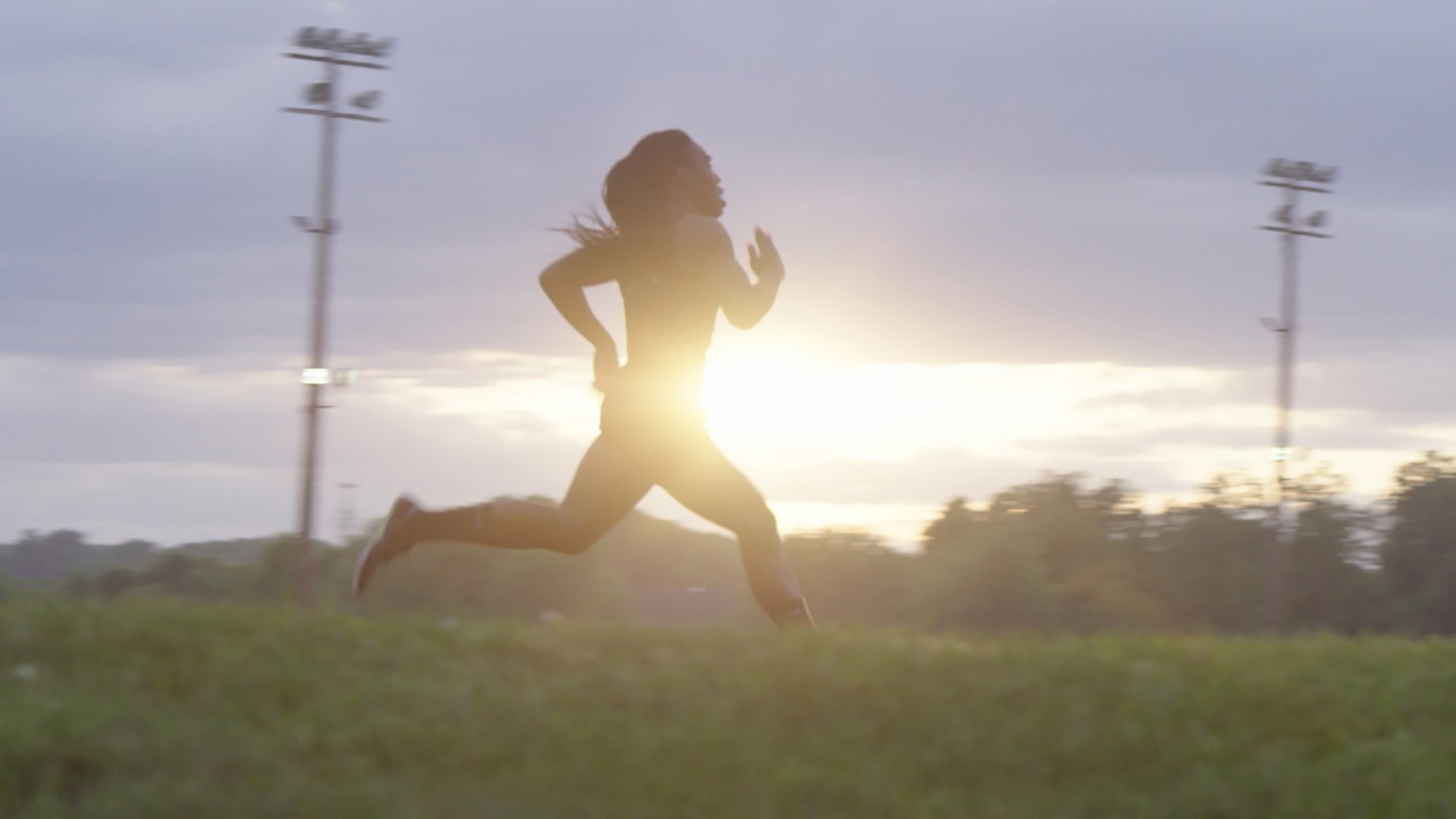
Changing the Game, directed by Michael Barnett, is an incredible documentary-style film that outlines some of the struggles that trans athletes face not only on the field, but in their daily personal lives, too. It follows the lives of three high school athletes: Sarah, a skier fighting for trans rights in her state, Andraya, a track athlete finding her way as an African American trans woman, and Mack, a wrestler fighting for his right to fight on the men’s team rather than the women’s. This movie is invaluable in understanding what everyday life is like you are trans, and here is why.

Throughout the film, the three characters face heart-breaking discrimination and we are able to see how it affects them and their lives. When Andraya is racing at a track meet, people in the bleachers yell that she is a man, that she has a mental illness, that she is making a mockery of girls’ sports, and that she is ruining what girls have worked so hard to get for years. These comments suggest that Andraya’s not a woman, and that she has no right to be doing what she loves. These comments were hurled from middle-aged, white, presumably cisgender people – this raises some serious questions and concerns about the power dynamics in place today. It also leads us to wonder what these interactions would have been like if Andraya were white and trans, or African American and cis.

Mack is shown browsing through Facebook posts about his wrestling accomplishments, but nearly all of the comments say things such as, “she shouldn’t be allowed to compete”, and even “it should kill itself”, which dehumanize him entirely. Mack even finds pages that are dedicated to tearing down him and his accomplishments. These occurrences are startling, but unfortunately, as Mack expresses, they are not rare for trans people. In “The Whites of Their Eyes: Racist Ideologies and the Media”, Stuart Hall examines the perpetuations of racism in media, and he says, “institutions like media produce, reproduce, and transform ideologies” (Hall, 19). Though he was speaking about race, we see this same production and reproduction with Mack’s case, because of the parallels seen in the oppression of both racialized and trans people. People are producing the ideology that only cis people should play sports by creating hateful Facebook pages, and it is being reproduced by the people commenting on positive pages about Mack who are deliberately trying to tear him down. These interactions reveal a detrimental relationship between cis and trans people and the ways that trans people are oppressed and discriminated against.

The film also touches on institutionalized discrimination and shows how trans people are disadvantaged right out of the gates. Sarah explains how the policy for all state sports used to be that gender reassignment surgery had to take place before someone could compete in that gender category. Sarah talks about how it should be the person’s choice to reassign or not, and that it should not be the state’s business at all. Sarah also faces workplace discrimination in her job as a ski instructor, where she works knowing that if her employers find out she is trans, she will be fired simply for being who she is. This kind of discrimination leads her to advocate for the passing of Bill HB1319, which would give trans people basic rights under the law and would prevent things such as nonsensical job loss. When we see Sarah talking about this bill in court, she has people that testify against her, saying that they would be scared for their children having to “share a bathroom with predators”. In “Age, Race, Class, and Sex: Women Redefining Difference”, Audre Lorde speaks on how we handle differences, and she says that the first thing we do is “ignore it, and if that is not possible, copy it if we think it is dominant, or destroy it if we think it is subordinate” (Lorde 115). The comments that Sarah receives directly reflect Lorde’s ideas. The concerns these people have were not brought up publicly until this court hearing, which shows that they first decided to ignore the difference. When, however, the issue is brought to court, the difference becomes too significant to ignore, and so the privileged group (cis people) creates a subordinate group out of what they perceive to be “different” (trans people), and this is where we see the “destroy it” portion of Lorde’s claim.

The reasons that Changing the Game is invaluable for understanding trans issues do not stop here though. This film also manages to keep the tone light at times though, showing Andraya having gossipy hangouts with her friends, and talking about her funny dating life. They show Mack and his girlfriend, Preslee, and Mack talks about  never liking horses, but he does now because Preslee loves them. We also see Sarah making YouTube videos where does makeup tutorials and vlogs her school life. These interactions work to challenge the cissexist gender binary which tells us that cis people are the only ‘normal ones’, by showing the teens having typical teen experiences.

At first, I was disappointed that the film ended the way it did, because I wanted a happier ending. I will refrain from spoiling the plot, but the ending of the film felt slightly abrupt to me, and it felt like the stories were not finished yet. This was something I disliked at first, but after thinking about it more, I came to appreciate the message that this abrupt stop sent.

The journey for those three kids is never over, and their stories do not end there – they will still face discrimination, and they will continue to fight for every single victory, big or small. This abrupt ending symbolized the unending journey of fighting to be you, and that there is not a true happy ending for these kids – at least not yet. The slightly unsettled feeling I was left with gave me motivation to do more to help, and I hope that it had this same effect on the others who have watched as well, because this is the feeling that we need to instill in people so that big scale change can happen.

For more information on how you can help support trans rights:

https://www.thetrevorproject.org/

https://transequality.org/

For more information on Reelout Film Festival:

https://www.reelout.com/

References

Lorde, Audre. 1984. “Age, Race, Class, and Sex: Women Redefining Difference.” Sister Outsider: Essays and Speeches. Crossing Press, 1984. pp. 115.

Hall, Stuart. “The Whites of Their Eyes: Racist Ideologies and the Media.” Gender Race and Class in Media: A Text Reader. Ed. Dines, Gail and Jean M. Humez. California: Sage Publications, 1995. pp.19.

Word Count: 1033
Queer Intimacies- Analysis

The Queer Intimacies Shorts Program provided different narratives about what it looks like to have romantic, queer relationships. It analyzed problems that are consistent in heterosexual relationships and queer relationships while looking into the dynamics within the relationships and the different facets that come with being queer. The films were entertaining but lacked in intersectional, specifically racial and ethnic representation. The films explored romantic dynamics in queer and heterosexual relationships, the binary and non-binary aspects of these relationships, and the diverse spectrum of sexuality.

The first short film in this series, The Tragic Fall of Valerie Mallory Finkerstein, was about what society considers to be queer. The leading woman could not be present at the moment or listen to her friends when they tried to provide her with advice. It was clear to the audience that Valerie was desperate for her best friend to love her, which is an interesting approach to lesbian relationships. I liked that there was an emphasis on Valerie being unsure of herself, but knowing that she wanted her friend, Ava, to love her. This film expands on the point of being unsure about yourself, and unsure about what we desire sexually and romantically, but having a good idea of who we want. Valerie knows she loves Ava and also requires social abundance and distractions. Her character was very interesting, and I enjoyed how fixed she was on displaying her affection to Ava at her birthday party. The images in the film were beautiful; the setting in the park was magnificent. I enjoyed the plot too, and the narrative of complex sexual feelings, especially when it comes to your friends. I think the situation between Valerie and Ava happens more often than we think, and this film displayed the narrative so openly that it helped to connect to the characters. The film had a narrative that we see very often in movies – an individual falling in love with their best friend, and having all of the clichés and heteronormative ideas of love. However, this narrative is portrayed frequently through a heteronormative lens, so it was refreshing to see this storyline in the eyes of Valerie.

The second film, Lost Cat, was about Nathalie, who had just gone through a huge conflict, trying to find her self again. She’s fired from her job, and her fiancée was unfaithful and broke her heart. Soon after, she finds a lost cat in her backyard and takes care of it. I think that the cat was a symbol of Nathalie needing to find herself to get through this rough patch. She needed to be reminded of who she was. She is also coming to peace with how hard it is for her to make connections with others and with herself. I think that the cat idea narrative of finding yourself and understanding yourself after something traumatic happens is important to understand. She is going through something that many people go through, regardless of their orientation. She was cheated on, and through this cat, she finds peace with herself. This film is not focused on her being queer but was about the struggles in her life. Her relationship was displayed subtly but was a big part of her narrative. The film explored Nathalie’s entire life at that moment, and how everything interconnects to create her situation.

A significant criticism that I have for all of the films is the lack of racial, religious, and ethnic representation within them. The film festival was supposed to be diverse and representative, and it was not. All of the leads, except one, were white. In Lost Cat, a black woman was playing the woman who cheated on Nathalie, which is racialization because it imposed a specific negative identity of her indirectly onto the audience. The few times that the films represent a person of colour, they are used for tokenism (including a person of colour to ensure that the cast is not all white) or portrayed with a negative narrative. Media has been used in the past to promote racial supremacy, so it is important to represent diverse groups in media today in order to promote equality and to destruct the ideas of racial supremacy. As discussed in Races, Racism, and Popular Culture, “Racism is connected integrally to the history of modernity and modern technologies have provided a key means in the establishment of racial supremacy” (Back and Solomos 255).

Additionally, there was little to no representation of a variety of intersectionality. There was no transgender representation or racial representation. I think an important part of the movies was for the authors to ask themselves this question that Peter Kaufman proposes in an article he wrote in 2007; “how do my race, gender, class, and other social positions enable my actions in some instances and constrain them in others” (Kaufman). Portraying the diverse social “intersections” that are not recognized often can only benefit everyone involved by educating them, being inclusive, and resonating with a greater amount of people and affecting them in stronger ways.

The fourth film, Things That Happen in the Bathroom, exploresthe ideas of yearning for love, desperation, and pain through a homonormative lens. It explores the intimacies shared between a young man and an older man within a sexual relationship. It is clear that the younger man wants more than sex; he is interested in being intimate in other ways. He asks to have sleepovers and is persistent in other ways to have other forms of intimacy. The movie explores this dynamic, which I appreciate because it is very common, but we do not see it portrayed in popular culture and the media very often. The dynamic between these two was uncomfortable at some times, but that challenged me, and I enjoyed it. I was forced to confront the things that happen to a young gay man in one of the most intimate, private spots: the bathroom. This film was not only about being intimate with someone else; it was about being intimate with yourself. One term addressed in the film subtly is “binary,” defined in the course glossary as “a binary model of categorizing people into two distinct groups of gender based on the sex they were assigned at birth.  Gender and sex almost overlap in this essentialist model. Gender expression and sexual orientation are expected to be in congruence, and certain gender roles, usually in contrast to each other, are ascribed.” This film explored the young man not following binary roles associated with his gender. He wears makeup and expresses himself contrary to the social norms of the male identity.

Word Count: 1,101

References

Back, Les and John Solomos. “Race and Racialization: Essential Readings.” Races, Racism, and Popular Culture. Toronto: Canadian Scholars Press, 2007. 255.

Kaufman, Peter. Intersectionality for Beginners. 23 April 2018. <https://www.everydaysociologyblog.com/2018/04/intersectionality-for-beginners.html#more&gt;.

Sex, Sin and 69- Analysis

As a history fanatic, the movie that piqued my interest was Sex, Sin and 69. The documentary is in an interview styled format where the audience hears the perspective of a group of Canadians who have  experienced the aftermath of the changing Canadian law regarding homosexuality. The film detailed the oppression and suffering that the LGBTQ community has faced around the world. When measuring it against today’s society, tolerance and equality has come a long way in Canada. The title of the movie pays tribute to how in the year 1969, the Canadian Bill C-150 was passed which was a steppingstone to the decriminalization of homosexuality. Overall, the film did a good job delivering the facts and perspectives of the legalization and acceptance of homosexuality but failed in having more representation and maintaining audience attention.  

For the audience to enjoy a documentary, the facts must be presented in a way that is captivating. This documentary was very artistic but felt a bit repetitive. The delivery of facts was very uniform; it was on a clear and concise timeline, but more videos and animation could have been included. I found myself bored at sometimes because the film felt like it was constantly people, I chairs answering various questions. The film was made in a more serious and professional manner which could explain why it was very uniform.  

One of the highlights of the documentary was listening to the history which was depicted through people’s experience and testimonies about that time in their life. They had an animated timeline which was narrated and highlighted with the use of newspaper and magazine articles. This was an interesting medium to deliver the facts and had historical meaning because it showed how pop culture viewed the “controversial” topic.  In the chapter about popular culture in the book, Race and Racialization Essential Readings,  the author defines propaganda as “the transmission of ideas and values from dominant groups who control the means of communication, with the intention of influencing the receivers’ attitudes and thus enhancing and maintaining their position and interests” (Solomos & Back, 2007:247). Some of the headlines were demonstrative of the hate that the homosexual community faced. This hate could be perceived as propaganda as the papers tried to advertise homosexuality as a medical illness. This definition connects to the film because the dominant group, the heterosexuals, alienated the homosexual community through means of mass communication. After they showed the timeline, there were clips from various interviews which were conducted. These interviews including some Canadian people, including a priest who officiated the first gay marriage in Canada, various human rights lawyers, a gender studies professor and a couple of people who directly experienced these societal changes themselves.  

A major criticism I have for the film is that there is a lack of sexuality, gender, and racial representation. The film did an excellent job of representing gay men, but only had two women speakers, one who spoke about being lesbian before 1969 in Quebec and one who is a gender studies professor. Having a lack of women speak was disappointing because I believe that they share a different perspective with regards to this history and current issues regarding the LGBTQ+ community. Being that this was a film about gay rights, I believe that they should have shown equal parts gay oppression of men and women, while also highlighting the different ways this is experiencing by utilizing an intersectional lens. The queer film festival is promoted a sa positive, inclusive space. It was disappointing to see the lack of representation of these marginalized groups within this space. In addition to women, there was also no representation of the transgender community or the two-spirit community. They showed clips discussing two-spirit people and drag queens, but they did not have individuals with lived experience speak and share their own perspective. Not only was there a lack of diverse genders and sexualities represented, but there was also barely any racial diversity. Intersectionality is a very important concept and it would be nice for someone to have had spoken from experience. As mentioned in “intersectionality for beginners” by Peter Kaufman, “Because the intersectional experience is greater than the sum of racism and sexism, any analysis that does not take intersectionality into account cannot sufficiently address the particular manner in which Black women are subordinated”(Kaufman, 2018). Intersectionality is a lens where we can knowledge that every person has their ow story and their own perspective. These perspectives and experiences occur through their intersectional les, which is why I wish that they would have shown a more diverse group with unique experiences. This will encourage and include marginalized groups into the discourse surrounding LGBTQ+ issues, which does not happen enough within mainstream media. The bigger picture is about human rights as a whole and societies stride to achieve acceptance and tolerance for everyone. Intersectionality is the key to understanding how society works and it would have been nice to see more representation because of it.  

Overall, the film Sex, Sin, 69 was a good documentary outlining the historical evolution LGBTQ + rights and acceptance in Canada. This movie was produced in 2019 which is 50 years after bill C-150 was passed, and a lot has changed since then. In society today, people are more accepting and respectful of the LGBTQ+ community because of the empowering, inclusive and encouraging actions of those in 1969.  

Word count: 901 

References:

Back, Les and John Solomos. “Race and Racialization: Essential Readings.” Races, Racism, and Popular Culture. Toronto: Canadian Scholars Press, 2007. 247. 

Kaufman, Peter. Intersectionality for Beginners. 23 April 2018. https://www.everydaysociologyblog.com/2018/04/intersectionality-for-beginners.html#more&gt;.  

Design a site like this with WordPress.com
Get started